Is a Third Paycheck Really Extra? Check These 4 Numbers First
A third paycheck lands in a biweekly-pay month. Is the whole check finally extra?
Sometimes, but only after the next pay window is covered. The calendar label does not decide what is available. The dates of the next bills, essential costs, and the next paycheck do.
Want the current number?
Use the free paycheck budget calculator. Enter the available balance after the deposit, unpaid bills due before the next paycheck, remaining essentials, and a reserve. No signup or bank connection is required.
Why the third paycheck is not automatically free money
A typical biweekly schedule has 26 paychecks in a year. A budget built on two checks per month uses only 24 of them, so two calendar months usually contain a third check. That timing can create real room in the budget, but it is not a raise and it does not erase the next 14 days.
The check may still need to cover groceries, transport, a biweekly payment, an automatic withdrawal, or a bill due early in the next calendar month. If those amounts are already funded elsewhere, more of the check may be unassigned. If they are not, protect them first.
Use this four-number check
Amount to protect = unpaid bills + remaining essentials + chosen reserve
Currently unassigned = available balance - amount to protect
Use the bank's available balance after the paycheck arrives. If that balance includes money carried forward from earlier checks, the result applies to the full balance, not to one deposit in isolation.
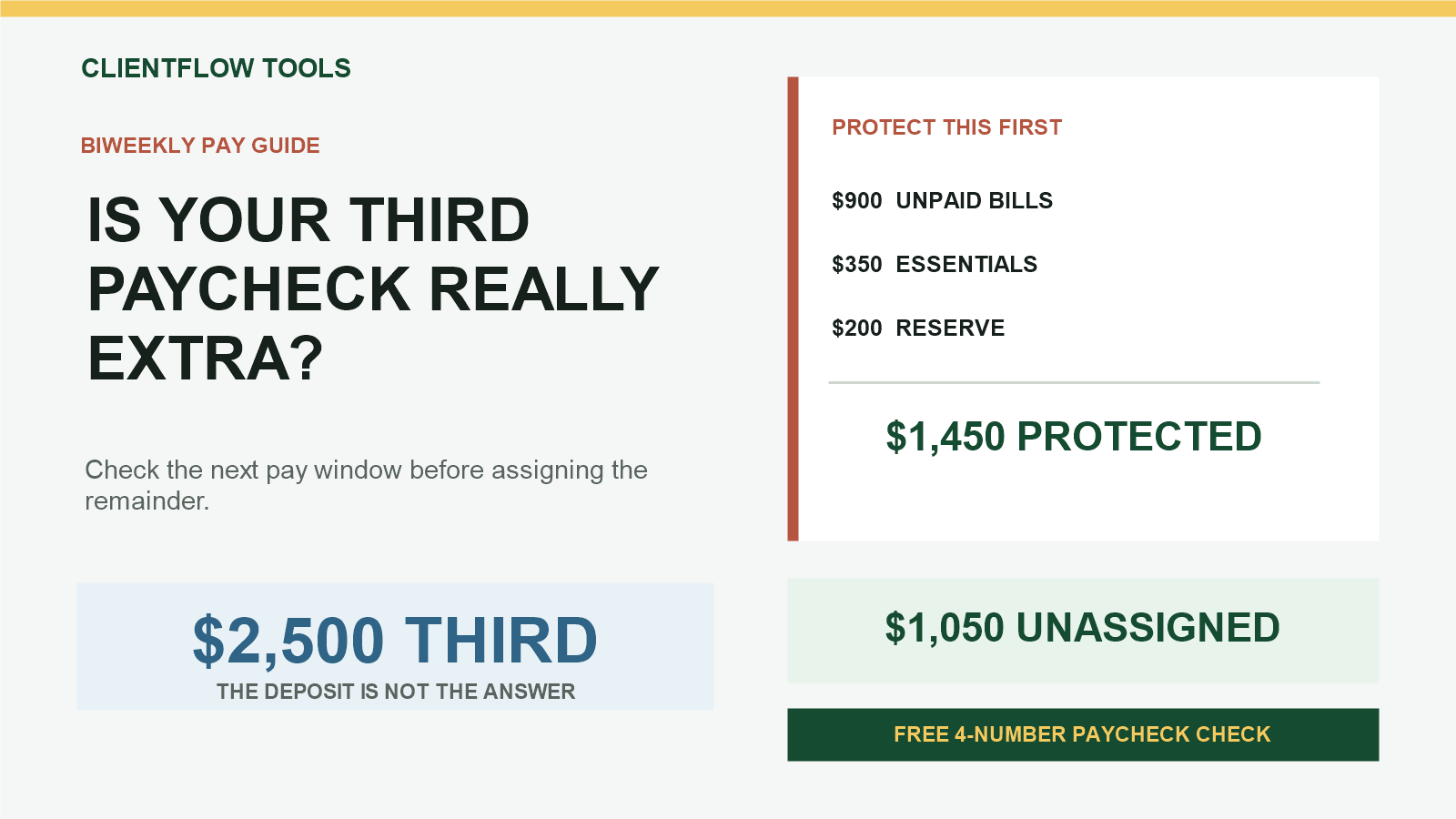
A clear $2,500 example
Suppose the available balance is $2,500 after the third paycheck and the next paycheck is two weeks away:
| Available balance after the third paycheck | $2,500 |
| Unpaid bills due before the next paycheck | -$900 |
| Groceries, transport, and other essentials | -$350 |
| Reserve left untouched | -$200 |
| Currently unassigned | $1,050 |
In one line: $2,500 - $900 - $350 - $200 = $1,050.
The check created extra room, but the current estimate is $1,050, not the full $2,500. The other $1,450 still has a near-term job.
When most of the check may be extra
If the normal two-check budget already funded every bill through the next payday, essential spending is covered, automatic payments are accounted for, and the chosen reserve is intact, the calculation may leave most or all of the third check unassigned.
That result still does not decide what to do with the money. Savings, debt, investing, transfers, and discretionary spending are separate choices that depend on goals, terms, risk, taxes, and personal circumstances.
When it is not fully extra
- Rent or another large bill is due before the next regular paycheck.
- Groceries, transport, medication, or other essentials still need to cover the next two weeks.
- A mortgage, loan, or transfer also runs every two weeks and creates a third payment.
- An automatic payment is scheduled but has not reduced the available balance yet.
- The checking reserve or next-month opening balance is not yet funded.
Use dates, not the word "extra"
The CFPB's cash-flow budget places income and expenses in the weeks when they actually occur. Its bill-calendar guidance likewise recommends listing bill amounts and due dates and comparing them with income dates.
That is the useful test here: look forward from the deposit to the next paycheck. Count every unpaid obligation once, include essential costs that still remain, and keep the chosen reserve separate.
What if the result is negative?
A negative result means the current available balance does not cover the amounts entered. It is a shortage warning, not a recommendation about which payment to delay. Verify the dates and amounts, then contact the relevant biller or qualified support service before a deadline if needed.
Free calculator or bill-by-bill planner?
Use the free calculator when you already know the four totals. Use the paid planner when you need to list individual bill names and due dates, assign them across two pay windows, and keep a printable record.
Check the current amount with the free live calculator. To sort individual bills across two paychecks, use the Two-Payday Bill Planner.
This article is for general educational organization only. It is not financial, banking, debt, investment, legal, or tax advice. Verify balances, bill amounts, due dates, automatic payments, account terms, and payment processing yourself.


Comments
Post a Comment